
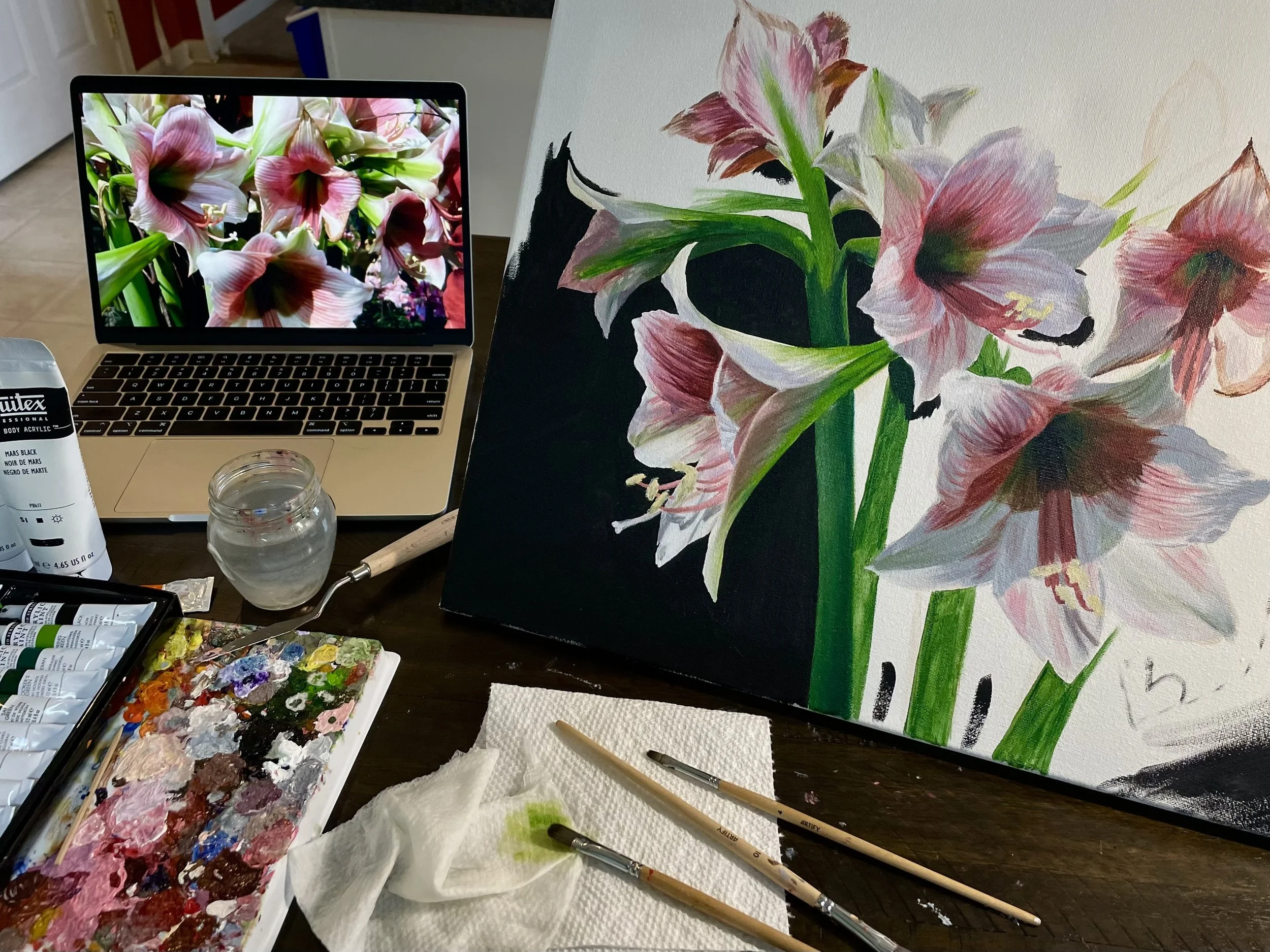
My pre-school teacher sat my parents down at a meeting and remarked, “She’s 4, and she’s drawing motorcycles and coloring inside the lines–she’s doing really good." I’d bet there are over a thousand school drawings that I brought home in my early childhood that my parents have kept, piled somewhere in our basement. However, when I hit the age of 11, that spark, that appeal to art, seemed to dwindle. Partly because middle school was rough, but also because of this idea that had developed in my mind; my art had to be perfect. Point blank. That I should sit down, pick up a pencil, and sketch up something that would make great artists gasp. For the better part of 2 years (most of it spent under quarantine), I developed art pieces I often hated because of the littlest things: the lines were too bold; the values were off; or there was one last mark made that ruined the entire piece’s potential. This perfectionism is what I can safely say has contributed to my attraction to realism.
I’ve learned that everything in life is a commitment, and it is up to us to decide if we want to choose abandon, or to stick around long enough to see ourselves succeed. That’s what’s beautiful to me about painting. I love the challenges that face me with each painting that I do, because I always find a way through and end up developing beautiful pieces. There’s a kind of quiet in the mind that every artist knows when that creative flow state is reached, and there’s peace in being able to focus on one aspect at a time to create a whole.
Luckily my current process does not consist so much of scrapping a piece simply because I don’t like how it looks. From the very first piece I’ve painted to my most recent, the period of time that I’ve spent dreading how the final product will look has gotten smaller and smaller. Indeed, it will always be a thought in the back of my mind during a piece, but that’s exactly what it is. Just a thought.